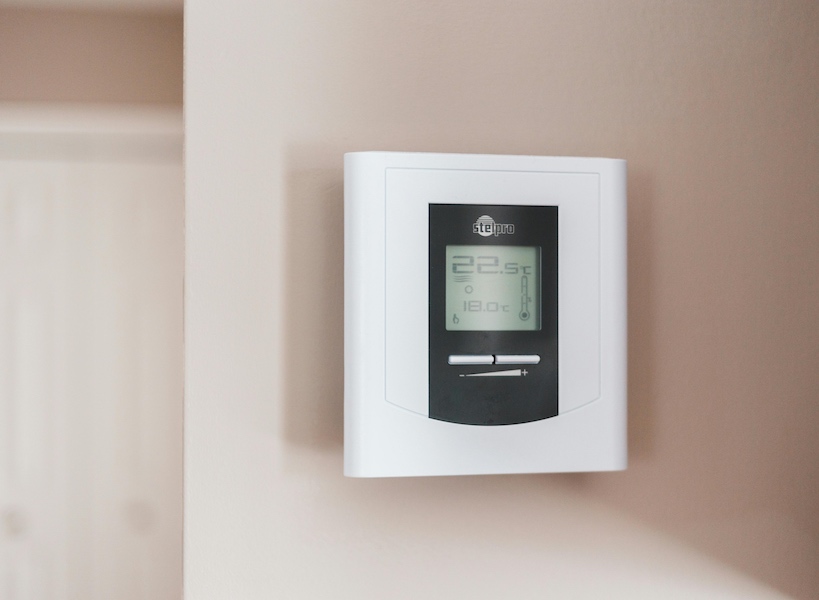
You're standing in front of your thermostat trying to figure out why your house is cold. You turn the dial up, wait five minutes, and nothing changes. Then you realize—the system was already set to 72°F. You just don't understand what you're looking at.
Not sure how to use your thermostat? Call 919-271-7961 or contact Southern Seasons Air for help.
A thermostat is just a switch that tells your system when to run. But which type you have—manual or smart—affects how much you pay and how much control you actually have.
A manual (or "dumb") thermostat is mechanical. You set a temperature, and the thermostat tells your HVAC system to turn on when the house dips below that setting. That's it.
Pros:
Cons:
Real cost: Most people with manual thermostats waste 10-15% on energy bills because they forget to turn it down when they're away.
A programmable thermostat lets you set different temperatures for different times of day. You program it once, and it adjusts automatically.
Example: Weekday morning at 6 AM, set to 72°F. At 8 AM when you leave, drop to 78°F. At 5 PM when you come home, back to 72°F. At 10 PM bedtime, up to 76°F.
Your system runs this schedule every day without you thinking about it.
Pros:
Cons:
Real value: A programmable thermostat pays for itself quickly through energy savings. We've documented this in detail in our guide about programmable thermostat savings.
A smart thermostat (like Nest, Ecobee, or Honeywell Home) connects to your WiFi. You control it from your phone, and it learns your schedule over time.
It tracks your temperature preferences, learns when you're home, and adjusts automatically. If you leave for vacation, you can turn the system down from the airport. If you come home early, you can pre-cool the house before you arrive.
According to ENERGY STAR, smart thermostats can save households up to 10% annually on heating and cooling.
Pros:
Cons:
Real value: A smart thermostat provides significant energy savings and typically pays for itself through reduced energy bills within a reasonable timeframe.
Stick with manual if:
Upgrade to programmable if:
Go smart if:
Not all thermostats work with all HVAC systems. Your current system might use 2 wires, 4 wires, or more. A smart thermostat needs compatible wiring.
Before you buy, have Southern Seasons Air check your system. We can confirm what type of thermostat will work with your setup. Visit our thermostat installation services page to learn more. Installation is usually quick and straightforward.
Your thermostat is one of the biggest levers for energy efficiency. A smart or programmable thermostat pays for itself, reduces your cooling costs, and gives you more control over your comfort. If you're still using a 20-year-old manual dial, upgrading is one of the smartest moves you can make. Many customers find their thermostat upgrade pairs well with our air conditioning service for optimal results.
Ready to upgrade your thermostat? Call 919-271-7961 to find out which type works with your system, or contact Southern Seasons Air. We serve Raleigh, Wake Forest, and Rolesville.
Southern Seasons Heating and Air Conditioning was founded in 2015 by owner/operator Anthony Johnson in Wake Forest, NC. Quality, integrity, and reliability are the cornerstones of our business philosophy.


